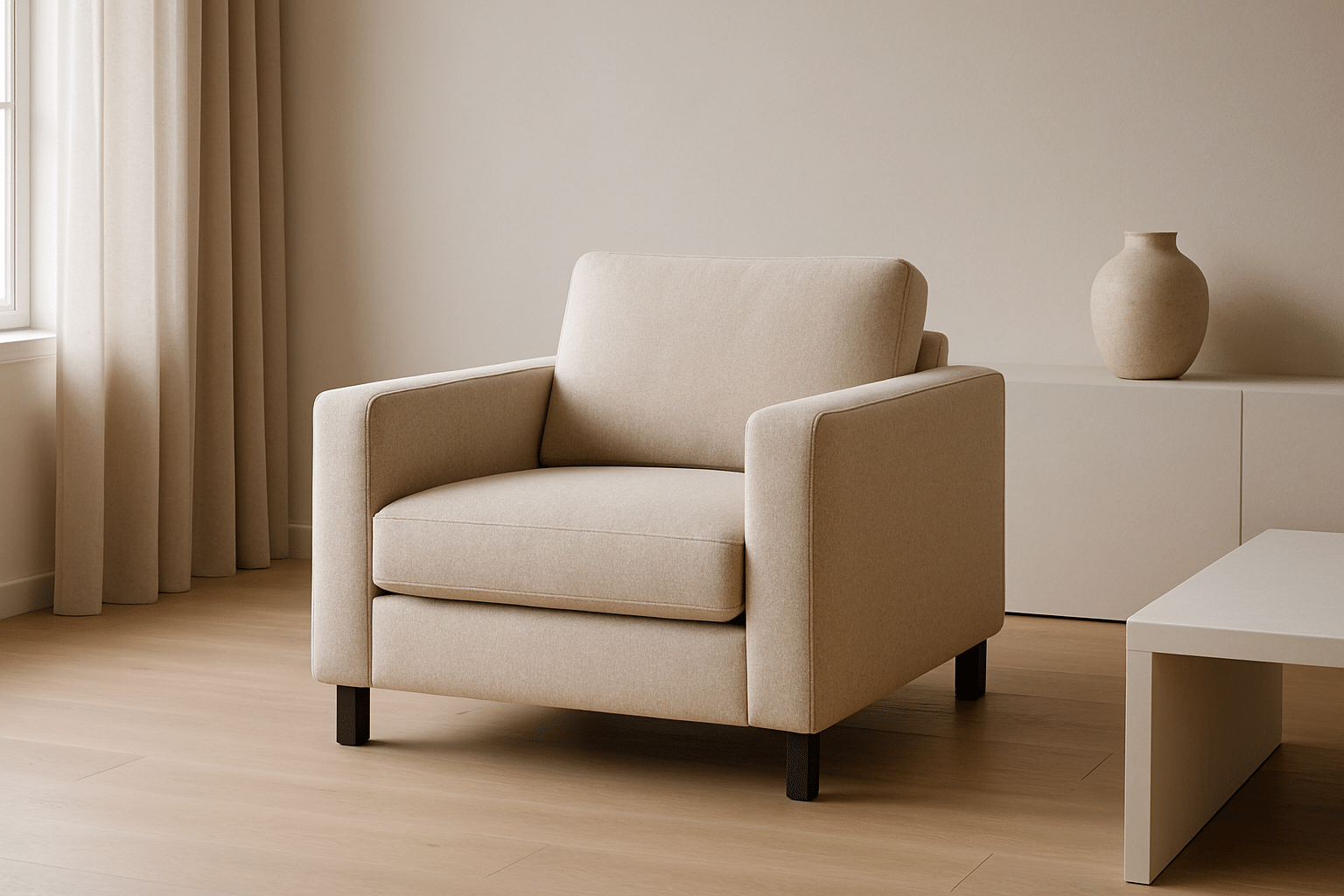
Summary
In 2026, minimalist apartment living continues to dominate interior design preferences across the United States. The contemporary armchair has evolved from a simple seating option into the centerpiece of functional, clutter-free spaces. This guide explores how to select the perfect contemporary armchair for a minimalist living room, focusing on silhouette, material, proportion, and multifunctionality. We examine the market landscape, compare design approaches, and explain how a curated selection—such as the pieces available at Ligne Roset—can anchor a room without overwhelming it. Whether you are furnishing a compact studio in a dense urban center or refining a spacious loft, the right armchair balances visual lightness with physical comfort.
What Defines a Minimalist Living Room in 2026?
Minimalism in 2026 is no longer about empty white boxes. It is a practice of intentional reduction: every object earns its place through use, beauty, or both. For a living room, this translates into clean sightlines, neutral or earthy palettes, hidden storage, and furniture with sculptural presence.
A minimalist living room typically features:
- Low-profile seating with geometric clarity
- A restrained color palette: warm greys, oat, chalk, charcoal, or muted earth tones
- Natural light as a primary design element
- One or two statement pieces rather than many small accents
- Materials chosen for longevity: wool, bouclé, solid wood, stone, powder-coated metal
The contemporary armchair sits at the intersection of these principles. It must offer ergonomic support while remaining visually light. Bulky recliners or heavily tufted traditional chairs tend to break the visual flow of a minimalist room. Instead, designers favor pieces with lifted bases, slim profiles, and upholstery that absorbs rather than reflects noise.
Why the Contemporary Armchair Is the Key Piece in a Minimalist Apartment
In a minimalist living room, the sofa often establishes the room’s main axis. The armchair, however, completes the conversation zone and introduces a layer of personality. It is the piece guests notice because it sits slightly apart—turned toward a window, angled near a bookshelf, or placed opposite the main seating.
A well-chosen contemporary armchair offers three distinct benefits:
- Spatial Definition. In an open-plan apartment, an armchair marks the boundary between the living area and the dining or workspace without needing a wall or room divider.
- Material Contrast. A wool-covered armchair next to a leather sofa or a wooden dining table creates tactile variety without adding visual noise.
- Scale Flexibility. Armchairs are easier to reorient than large sofas, making them the most adaptable seating type for renters and owners in the United States who regularly reconfigure their spaces.
For example, a compact apartment in a dense coastal city may have a living room of 180 to 220 square feet. Here, a low-slung contemporary armchair with a swivel base allows the occupant to pivot toward the window, the sofa, or a small reading lamp with minimal effort. The chair does not dominate the room; it extends its usability.
Selecting a Contemporary Armchair for Minimalist Apartment Living Room Design
Proportion and Footprint
Before considering aesthetics, measure the available floor area. In 2026, many new-build apartments in the United States prioritize open kitchens and private bedrooms, leaving living rooms with unusual proportions—long and narrow, or square but compact.
A useful rule: the armchair’s width should not exceed one-third of the main seating wall’s length. For a 10-foot wall, choose a chair under 40 inches wide. Depth matters too. A deep lounge chair may look inviting in a showroom but feel oversized in a 200-square-foot room. Look for pieces with a visible gap between the floor and the seat base. This “floating” effect is a hallmark of contemporary design and makes a room feel larger.
Silhouette and Visual Weight
Minimalist interiors reward chairs with clear, recognizable silhouettes. Curved shells, barrel shapes, and angular frames all work when the lines are continuous and uncluttered. Avoid chairs with visible mechanical parts, excessive piping, or skirted bases.
Two silhouette families dominate contemporary armchair design in 2026:
- The Sculptural Shell. A single curved shell, often in molded foam or laminated wood, creates a self-contained form. It reads as a modern object even when unoccupied.
- The Architectural Frame. A slender metal or solid wood frame supports wide cushions. The contrast between the rigid structure and soft upholstery adds quiet interest.
At Ligne Roset, for example, the use of integrated foam architecture rather than separate cushions allows for fluid, sculptural forms that remain comfortable for long reading sessions. This approach supports the minimalist principle of removing unnecessary seams and edges.
Upholstery and Tactile Quality
Fabric selection changes both the look and the acoustics of a room. In minimalist apartments, sound absorption matters. Hard surfaces—concrete floors, glass windows, plaster walls—create echo. Textured upholstery helps soften sound while inviting touch.
Recommended textiles for a contemporary armchair in a minimalist apartment:
- Bouclé wool. Soft, nubby, warm to the touch. Excellent for adding depth to a neutral palette.
- Matte velvet. Absorbs light rather than reflecting it, making the chair feel anchored.
- Tight-weave linen blends. Casual but refined; works well in apartments with abundant natural light.
- Microfiber or technical weaves. Practical for households with pets or regular guest use.
Leather remains a valid choice, especially in warmer climates where fabric can feel heavy. A full-grain or corrected-grain leather in a matte finish suits minimalist rooms better than high-gloss finishes, which can appear commercial.
Color Strategy
In 2026, the minimalist palette has matured beyond pure white and grey. Designers increasingly introduce warm neutrals and moody accents. A contemporary armchair can serve as the room’s single color anchor.
Three effective color strategies:
- Tonal Blending. Choose an armchair in the same color family as the sofa but one shade darker or lighter. This keeps the room cohesive and serene.
- Earthy Contrast. Pair oat or sand upholstery with a charcoal or deep forest accent chair. The warmth prevents the room from feeling cold.
- Material Match. Match the armchair’s fabric to another element in the room, such as a wool rug, a linen curtain, or a textured wall hanging. The repetition creates rhythm without extra colors.
Swivel, Lounge, or Occasional: Matching the Chair to Its Use
The Reading and Relaxation Chair
If the armchair will be used primarily for reading, prioritize back height and seat depth. A high back supports the neck, while a deep seat allows legs to stretch. Many contemporary designs now include a subtle recline without visible mechanisms, using molded foam to hold the body in a relaxed position.
Swivel bases are especially practical in minimalist apartments because they allow the occupant to change orientation without moving the entire chair. A swivel armchair placed near a corner can serve the sofa conversation zone, a window view, and a floor lamp with a single rotation.
The Occasional and Guest Chair
For smaller spaces, an occasional chair offers a lighter footprint. These pieces often have narrower seats, higher legs, and slimmer profiles. They work well as secondary seating at a desk, near a kitchen island, or as part of a reading nook. However, occasional chairs should not be the primary seating in a living room used daily, as they lack the ergonomic support needed for long periods.
The Statement Piece
Some apartments warrant a bold armchair that draws the eye immediately. In a minimalist context, this does not mean a bright floral print or oversized proportions. Instead, it means an unexpected shape—a curved shell, an asymmetric armrest, or a sculptural base. The Ligne Roset collection includes several pieces that function in this way: recognizable forms that are immediately identifiable but still disciplined in their use of material and line.
Comparison: Contemporary Armchair Design Approaches in the United States
European Modular Design vs. American Relaxed Comfort
In 2026, American buyers can choose between two broad design traditions. European-style contemporary chairs—particularly those from French and Scandinavian ateliers—emphasize sculptural form, precise tailoring, and a closer relationship to architecture. They often sit firmer, encouraging upright posture and active engagement. American contemporary chairs, by contrast, sometimes prioritize deep cushions and softer suspension, leaning toward lounge-style comfort.
Neither approach is inherently superior. The right choice depends on how the chair will be used. For a minimalist apartment where the living room hosts conversation, reading, and occasional work, a European-inspired silhouette often fits better because it maintains a defined presence even when unoccupied.
The Ligne Roset approach bridges these traditions. The brand is known for pieces that combine architectural form with deeply considered comfort—seats that welcome long evenings but still look like designed objects in daylight.
Fixed Upholstery vs. Removable Covers
Another 2026 comparison point is maintenance. Fixed upholstery offers a cleaner, more tailored appearance. Removable covers add practicality for households with children or pets.
What to consider:
- Fixed upholstery works well for statement chairs in adult-focused living rooms.
- Removable covers suit family apartments where spills are likely.
- Natural fibers require more care than performance synthetics.
- Darker colors hide wear; lighter colors show stains but are more photogenic.
In a minimalist apartment, visual clarity usually favors fixed upholstery with hidden stitching. However, several contemporary designs now offer zippered cushions that do not compromise the chair’s clean outline.
Online Purchase vs. In-Person Selection
Since 2024, the United States market has fully embraced online furniture purchasing for many categories, including contemporary armchairs. High-resolution photography, 360-degree viewers, and detailed material libraries allow customers to evaluate proportion and fabric from home. Still, the tactile nature of upholstery means many buyers prefer to see and sit in a chair before purchase.
Ligne Roset offers an online browsing experience for the U.S. market, supplemented by consultation options. For buyers near a showroom, an in-person visit allows direct comparison of fabric swatches, cushion densities, and finish options. For those purchasing remotely, the website’s detailed imagery and specification sheets help bridge the gap.
The Role of Lighting and Accessories Around a Contemporary Armchair
A contemporary armchair in a minimalist apartment should not stand in isolation. It needs a supporting cast: one light source, one side surface, and perhaps one rug. These elements frame the chair and make it a functional zone rather than a decorative object.
Lighting
A floor lamp placed behind or beside the armchair creates a pool of light for reading. In 2026, LED lighting with warm color temperatures (2700K to 3000K) remains the standard for living rooms. Architectural lamps with slender profiles complement contemporary chairs. Avoid floor lamps with heavy, ornate bases that compete with the chair’s silhouette.
Side Tables and Surfaces
A small side table must be within reach of the seated person. It should be lower than the armrest by two to four inches. Round or organic shapes soften the geometry of angular chairs; rectangular tables suit curved chairs. Materials can match the chair’s base—brushed metal with metal, wood with wood—or intentionally contrast.
Rugs and Floor Coverings
An area rug beneath the armchair anchors it spatially. The rug should extend far enough that the chair’s front legs rest fully on it. For compact spaces, a smaller rug that sits entirely under the chair and side table creates a defined micro-zone. Wool and wool-blend rugs remain the top choice for durability and sound absorption in minimalist apartments.
Integrating a Contemporary Armchair with Designer Lighting and Dining Pieces
In open-plan apartments, the living room armchair shares visual space with the dining area and any lighting installations. Choosing pieces that share a design language—similar metal finishes, related wood tones, or complementary fabric textures—creates a coherent interior.
For example, a contemporary armchair with a matte black swivel base pairs naturally with designer lighting fixtures in brushed steel or blackened brass. A wool-upholstered chair works well with a solid wood dining table in a warm oak or walnut finish. The goal is not to match every material exactly but to repeat one or two finishes across different furniture types.
Ligne Roset’s collections include contemporary dining tables and designer lighting alongside seating, which simplifies the coordination process. Rather than sourcing pieces from multiple unconnected manufacturers, buyers can select items that are designed to coexist. This integration reduces the decision fatigue common in furnishing a new apartment in 2026.
Practical Buying Considerations for 2026
Lead Times and Availability
The furniture industry in the United States has stabilized since the supply disruptions of the early 2020s, but lead times for made-to-order contemporary furniture still vary. In 2026, many American buyers encounter wait times ranging from a few weeks to several months, depending on the manufacturer and the complexity of the order.
When planning a minimalist apartment refresh, order key pieces first. The armchair and sofa often have the longest lead times. Rugs, lighting, and accessories can arrive later without disrupting daily life.
Space Planning Before Purchase
Use masking tape or cardboard templates to outline the armchair’s footprint on the floor. This quick step reveals whether the chair blocks a walkway or crowds a coffee table. Consider the chair’s height as well. In rooms with low ceilings, a low-profile chair preserves vertical space. In rooms with tall ceilings, a higher back can feel more grounded.
The Value of a Coordinated Selection
A contemporary armchair is not an isolated purchase. It interacts with every other object in the room. Buying from a single design house—such as Ligne Roset—offers a practical advantage: the proportions, materials, and design philosophy are already aligned. This accelerates the selection process and reduces the risk of a chair that looks beautiful online but feels out of place in the room.
What to Look for in 2026: Materials and Details
Contemporary armchair construction in 2026 reflects broader shifts in material science and consumer expectations. High-resilience foam remains the most common seat core, often layered with fiber wrap for softness and longevity. Molded foam shells allow sculptural shapes without visible seams. Solid hardwood frames provide durability, while sprung metal bases add a slight flex that improves comfort.
Key details to examine:
- Seam alignment. On high-quality pieces, seams follow the chair’s curves evenly. Uneven stitching or visible glue lines indicate lower manufacturing standards.
- Base material and finish. Powder-coated steel and solid wood bases resist chipping better than painted metal.
- Swivel mechanism. Smooth, quiet rotation is achieved with ball-bearing systems. Test the chair’s movement if possible.
- Upholstery density. Rub tests and abrasion ratings matter less for residential use than for commercial settings, but a fabric should feel dense and evenly tensioned.
Conclusion and Next Step
The contemporary armchair remains the most versatile seating piece in a minimalist apartment living room. It defines zones, adds texture, and supports daily rituals—reading, conversation, morning coffee, evening reflection. In 2026, the best choices combine sculptural clarity with real comfort, and they integrate with lighting, rugs, and dining furniture rather than competing with them.
Ligne Roset offers a curated collection of contemporary armchairs, designer lighting, and dining tables that align with the principles of minimalist design. If you are furnishing or refining a living room in the United States, explore the online collection to compare silhouettes and materials at your own pace. For more personalized guidance, schedule a consultation to discuss proportions, upholstery options, and delivery planning. The right armchair is not the largest piece in the room—it is the one that makes the room feel complete.